
TEXTILES
TEXTILES
Indian oganic Silk Muga, Are, Cottons Handlooms
Assam Meghalaya Manipur Mizoram Arunachal Pradesh, states of North East India
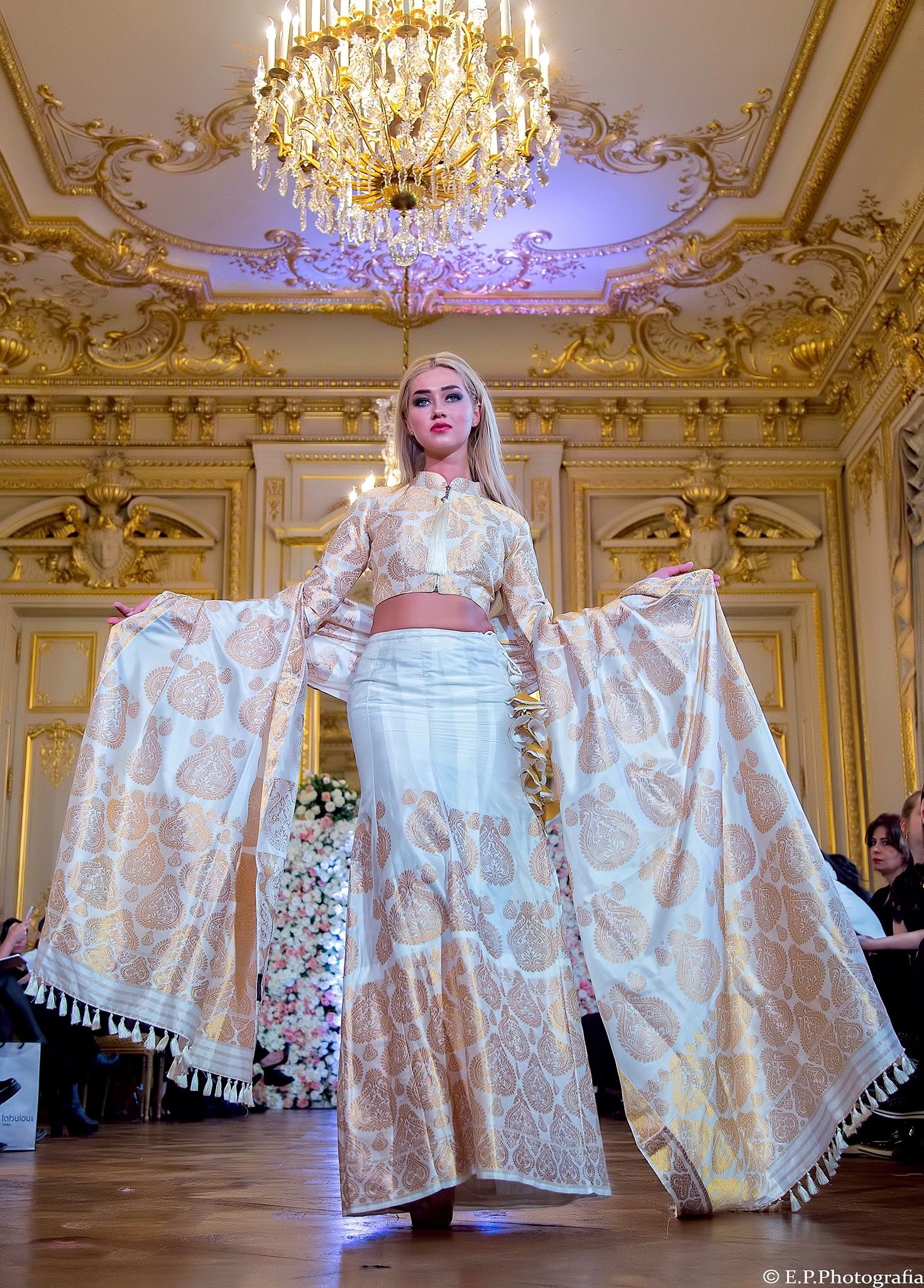
Assam handlooms ( Pat silk or White pat silk ) in Paris fashion shows (Design by K.Kaushik)
Silk from North East India
Muga Silk, the golden colour and shine of Muga silk gives it a unique look. In fact, it is also known as the “muga” colour. Another unique characteristic of this type of silk is that the shine of the fabric improves after every wash. That is why, Muga silk is considered one of the costliest silks in the world and for every Assamese women, a Muga mekhala chaddar (traditional dress of Assamese women) or a muga saree is always a very prized possession, much like her gold ornaments.
In 2007, this variety of silk was given the Geographical Indication (GI) tag, valid for 10 years. This is basically an indirect way of patenting the product in the name of Patent Information Centre, Assam Science Technology and Environment Council (ASTEC). The fabric is today used in the production of not only the traditional but also modern dresses like tops, skirts, shirts, kurtis, including shawls and home furnishings products. It is said that Muga silk worm is as old a habitat as the dinosaur and the silk is supposed to be the strongest silk in the world, after the spider silk.
Pat Silk fabric in Assam is derived from silk worms that live on mulberry trees and is also known as Mulberry Silk or “Nuni pat” in Assamese. This type of silk has a distinctive white and off-white colour and is known for its brightness, high quality and durability.
Eri and Muga silk, which are produced in substantial quantity and are indigenous to the state, are extremely popular in Assam. This silk is derived from eri worm or Samia cynthia ricini, which is found in and around Assam and some parts of Japan and China. Eri silk fabric, also known as Endi, has a course and thick texture as most of the fabric is hand spun and is used for making shawls, jackets etc. However, nowadays, finer textures are also available, which are used for making sarees, summer stoles, kurtis etc. Eri silk is not only a warm and soft fabric, but also has excellent characteristics such as it is anti-fungal, non-toxic, bio-degradable and a most sustainable textile.